
AKOOL: review, pricing and alternatives

What is AKOOL AI? An Overview
When I first encountered AKOOL AI, I was looking for tools that could genuinely streamline content production without requiring a dedicated editing team. AKOOL positions itself as an AI video creator and digital content platform designed precisely for this purpose. It's built to simplify and accelerate the creation of visual content, especially for marketing and advertising campaigns, by automating tasks that typically consume a lot of time and resources.
At its core, AKOOL is a generative AI platform focused on personalized visual marketing. It aims to help marketing creators and innovators produce content at scale. What immediately caught my eye were its primary capabilities: the ability to generate realistic AI avatars, perform advanced face swaps, and offer real-time video translation and dubbing. These features are marketed as a way to create engaging video content from a simple script, without needing extensive technical skills.
The promise is clear: move away from clunky video editors and expensive studio work towards a more efficient, AI-driven workflow. It’s designed to help creators, marketers, and teams scale their content across different markets and formats with relative ease. Essentially, AKOOL brings together several powerful AI models to automate various aspects of video creation, making it a comprehensive tool for those looking to speed up ad creation and improve their content output.
Key Features: Face Swapping, AI Avatars, and Video Translation
What truly sets AKOOL apart, and what I found most impressive during my exploration, are its core features. The platform’s AI face swap technology is frequently highlighted by users as being particularly stable, with some even claiming it’s the most stable on the market, especially for high-resolution output. This isn't just about swapping faces; it's about doing so with a degree of realism that can be genuinely surprising, allowing for personalized visual marketing at an unprecedented scale.
Beyond face swapping, AKOOL provides robust AI avatar generation. You can create realistic avatars that can deliver your message, eliminating the need for human presenters or complex video shoots. This feature, combined with the face swap, offers immense flexibility for content creators looking to maintain brand consistency or personalize messages for different target audiences without re-filming. It automates tasks that would normally require significant time and resources, making it possible to generate diverse content rapidly.
The third major pillar is its real-time video translation and dubbing capabilities. AKOOL allows you to translate and synchronize audio across multiple languages automatically. This is a game-changer for businesses looking to localize their content for global audiences. While it automates the process significantly, it's important to temper expectations; my research and other user feedback suggest that while it's a promising tool, it doesn't yet match the nuanced quality of human translators and dubbing artists. However, for quickly scaling content into new markets, it's an undeniable asset.
How AKOOL Works: Creating Content Step-by-Step
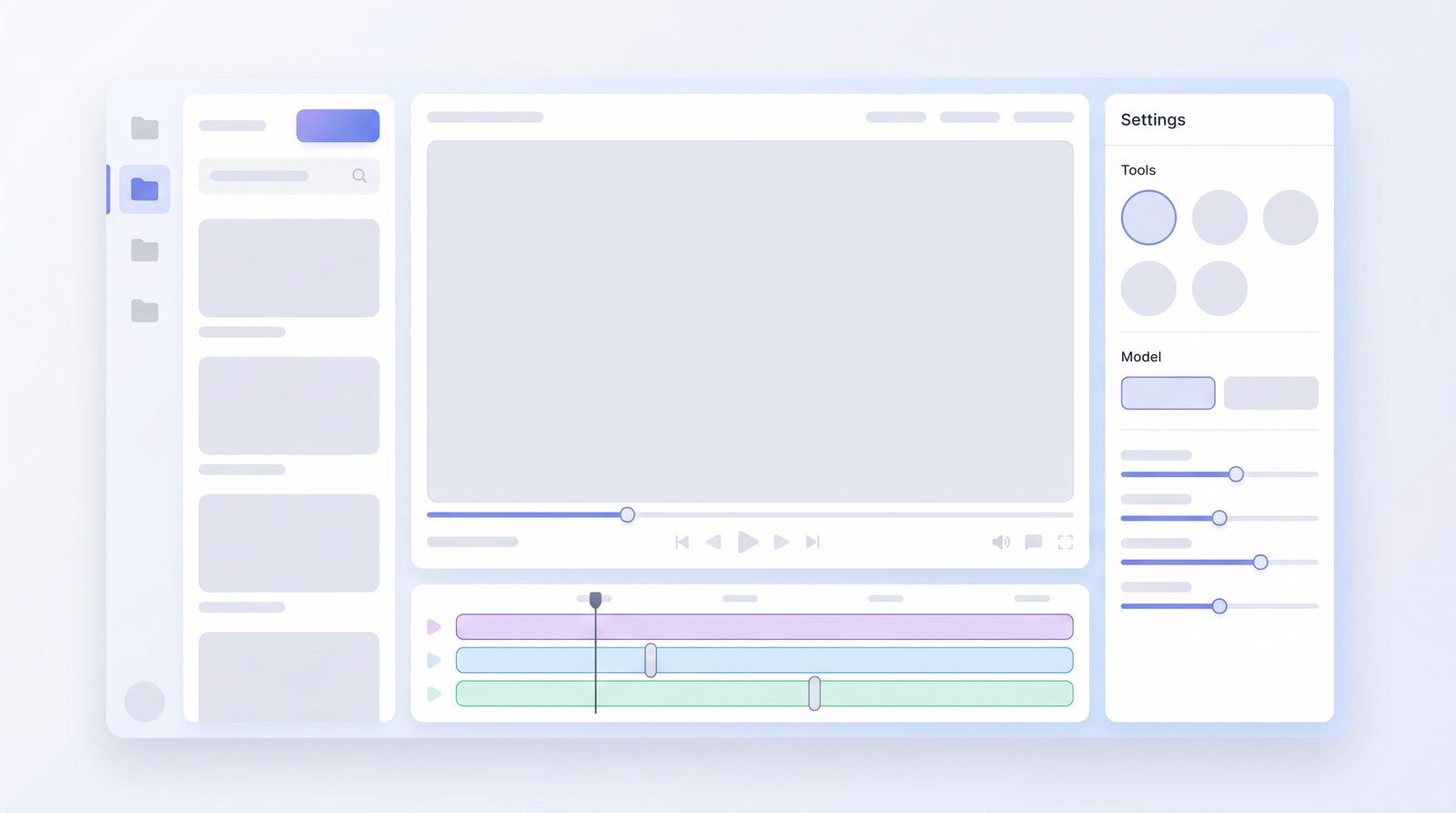
My experience with AKOOL suggests that the platform is designed with ease of use in mind, aiming to simplify the entire AI content-creation workflow. The general process is remarkably straightforward, even for users without a deep technical background in video editing or AI. It typically starts with your core message or a script. You input your text, and AKOOL takes it from there, leveraging its integrated AI models to bring your vision to life.
The workflow usually involves selecting an AI avatar or providing source material for a face swap, then inputting your script. For video translation, you'd upload your existing video and specify the target languages. AKOOL then combines various powerful AI models—like what some users have hinted at, such as Seedance or Kling—to process your request. This combination allows for tasks like generating speech from text, animating avatars, performing realistic face swaps, and synchronizing translated audio with video.
What I found particularly appealing is how it automates tasks that would otherwise require a full editing team. From a single script, you can generate videos using realistic avatars, swap faces, and automatically translate and sync audio. This means you provide the raw materials—your message, your script, maybe a source image or video—and AKOOL handles the complex generative and editing processes. It truly aims to be a 'few clicks' solution for scaling content creation, allowing you to focus on the impact of your message rather than the intricacies of post-production.
Performance & User Experience: Speed, Quality, and Control
When diving into AKOOL, I was keen to understand its performance, especially given the complex AI processes involved. User feedback, and my own observations, suggest a mixed bag. While the output quality, particularly for face swaps, can be surprisingly good and stable even for high-resolution content, there's a recurring theme regarding render times. Many users, myself included, have reported that renders can be quite slow. This can be a significant bottleneck if you're working on tight deadlines or need to iterate quickly on multiple content pieces.
Another area where AKOOL shows some limitations is in editing control. While the platform excels at automating complex tasks, it doesn't offer the granular level of control that a traditional video editor would. This means if you want very specific adjustments to timing, pacing, or intricate visual elements beyond what the AI generates, you might find yourself wishing for more options. It's a trade-off: immense automation for less fine-tuned control. This isn't necessarily a deal-breaker, but it's important to set expectations that AKOOL is more about rapid generation than detailed post-production.
Despite these points, the quality of the AI-generated elements, especially the face swaps, consistently receives praise. The AI avatars are also noted for their realism. So, while you might wait a bit for the final product and have less direct control over every pixel, the quality of the automated outputs often justifies the wait for specific use cases. It's a tool that excels at its core AI functions, delivering on its promise of realistic AI outputs, but perhaps at the expense of speed and ultimate creative freedom.
Pricing & Plans: Understanding the Credit System
Navigating AKOOL's pricing structure was, for me, one of the more confusing aspects of the platform. AKOOL operates on a credit-based system, which, while common in AI tools, can be notoriously difficult to budget for predictably. Users often report that understanding how many credits a particular task will consume, and consequently, how much a project will ultimately cost, can be quite opaque. This unpredictability can be a significant hurdle for individuals or teams trying to manage their expenses effectively.
The general price range for credits or subscription tiers seems to fall between approximately $21 and $500, depending on the volume of credits or features included. However, without a clear, upfront breakdown of credit consumption per feature (e.g., how many credits for a one-minute video translation versus a single face swap), it's hard to gauge the true value for money until you're deep into using the platform. This lack of transparency can lead to unexpected costs and frustration.
For those considering AKOOL, I'd strongly recommend a cautious approach to understanding credit usage. While the platform offers powerful features, the credit system can make budgeting a guessing game. It's an area where AKOOL could significantly improve its user experience by providing more clear-cut examples and a better credit estimation tool. Until then, be prepared for some trial and error in managing your credit consumption.
| Plan | Price Range (Approx.) | Best for |
|---|---|---|
| Starter/Basic Credit Packs | $21 - $50 | Solo creators, personal projects, initial testing of features. |
| Mid-Tier Credit Packs | $51 - $200 | Small teams, regular content creation, moderate volume needs. |
| High-Volume/Enterprise Packs | $201 - $500+ | Marketing agencies, large teams, extensive content scaling, high demand. |
Pros & Cons: The User Perspective
After spending time with AKOOL and reviewing widespread user feedback, a clear picture emerges of its strengths and weaknesses. On the positive side, what consistently impresses me and other users is the stability and realism of its AI face swap technology. It genuinely delivers on its promise here, often being cited as the best on the market for high-quality output. The overall automation of content creation is also a significant draw, allowing users to generate complex videos from simple inputs, which dramatically speeds up production times for certain tasks.
The simplicity of its content creation workflow is another major plus. You don't need to be a seasoned video editor to get started, making it accessible to marketers and solo creators. The ability to automatically translate and dub videos offers incredible potential for global content scaling. It truly brings together several powerful AI models into a seemingly simple interface, which is commendable.
However, AKOOL isn't without its frustrations. The most frequently cited complaint is the slow render times, which can impede productivity. Closely following this is the confusing and often unpredictable credit-based pricing system, making budgeting a challenge. Users also express a desire for more editing control, as the platform's automation, while powerful, limits the ability to fine-tune outputs. Finally, while the video translation is useful, it's widely acknowledged that it doesn't yet match the nuance, accuracy, and natural flow of human translators and dubbing artists, especially for high-stakes or sensitive content.
AKOOL excels in automating realistic face swaps and avatar generation, but its slow renders, complex pricing, and limited editing control are recurring pain points for users.
Who is AKOOL Best For? Use Cases and Target Audience
Based on its feature set and the feedback I've gathered, AKOOL is particularly well-suited for a specific set of users and use cases. I see it as an invaluable tool for marketers and marketing teams who need to rapidly produce a high volume of personalized visual content. Imagine creating targeted ads with localized faces or avatars for different demographic segments without extensive re-shoots – that's where AKOOL shines. Its ability to speed up ad creation and improve results by offering tailored visuals is a significant advantage.
Solo creators and small businesses looking to scale their content efforts without a large budget for professional video production will also find AKOOL highly beneficial. If you're a content creator who needs to produce engaging videos using realistic avatars or wants to experiment with face swaps for creative projects, AKOOL offers a powerful, accessible solution. It automates tasks that would typically require a full editing team, making it perfect for those with limited resources but ambitious content goals.
Furthermore, AKOOL is excellent for companies aiming to scale content across international markets. The real-time video translation and dubbing features allow for efficient localization of video messages, helping businesses reach broader audiences without the logistical complexities and costs of traditional translation services. So, if your strategy involves global outreach and personalized communication, AKOOL provides a smart way forward to streamline and amplify your content efforts.
AKOOL Alternatives & Comparison
In the rapidly evolving landscape of AI video creation, AKOOL isn't operating in a vacuum. It competes with a growing number of platforms that offer various AI-powered video generation, avatar creation, and translation services. Tools like Synthesys, HeyGen, and DeepMotion come to mind as general AI video creators, each with their own strengths in avatar realism, voice synthesis, or animation.
What I've consistently found to be AKOOL's primary differentiator, and a point of strong user consensus, is the stability and quality of its face swap feature. While other platforms might offer face swapping, AKOOL is frequently cited as providing the most stable and realistic results, especially for high-resolution output. This specific capability might make it the preferred choice for users whose primary need revolves around seamless and believable face manipulation in videos.
When comparing AKOOL to alternatives, it's crucial to weigh its strengths in face swapping and localized dubbing against potential drawbacks like render times and pricing clarity. For a broader look at how AKOOL stacks up against other tools in the market, you can see how it performs across various metrics on Top10k. While many AI video tools aim for similar outcomes, AKOOL's niche strength in face swap technology gives it a unique selling proposition that could make it the ideal choice for specific projects.
The Verdict: Is AKOOL Worth It in 2026?
After a thorough review, my verdict on AKOOL in 2026 is that it's a powerful tool with significant potential, but one that comes with its own set of considerations. For specific users and use cases, AKOOL offers immense value, particularly for its AI face swap and avatar generation capabilities, which are genuinely impressive in their stability and realism. If your primary goal is to create personalized visual marketing content, scale ads quickly, or localize videos across markets with AI-driven efficiency, AKOOL is absolutely worth exploring.
However, it's not a perfect solution for everyone. The recurring issues of slow render times, the often-confusing credit-based pricing system, and the limited granular editing control are significant drawbacks that potential users must weigh. While the video translation is effective for broad localization, it currently falls short of the quality provided by human translators for nuanced or critical content. It's a tool that automates tasks brilliantly but doesn't offer the creative freedom of a professional editor.
Ultimately, AKOOL is best suited for marketers, teams, and solo creators who prioritize rapid content generation and specific AI functionalities like face swapping and avatar creation over ultra-fast rendering or minute editing control. It's a promising tool that's pushing the boundaries of AI in content creation. While it has areas for improvement, especially in user experience around pricing and performance, its core strengths make it a valuable asset for those who can leverage its unique capabilities effectively. Consider it a specialized tool for scaling specific types of visual content, rather than a universal video editing replacement.
Full profile and live ranking: https://top10k.com/ai/akool
Published by

Discover Top10k Tools — a web-based utility hub providing a wide range of free utilities built to boost productivity.
The platform covers everything from SEO and coding to file converters, image tools, and handy calculators. All tools are free and browser-based, making them quick to access anywhere.
Top10k Tools is working toward building 10,000 free mini tools that solve real problems.
If your work happens online, you'll find utilities that save time. Jump in and start exploring.
Frequently asked questions
Is AKOOL free to use?
AKOOL operates on a credit-based system, meaning it is not free for full functionality. While there might be a free trial or limited free credits to test the platform, you will need to purchase credits or a subscription plan to produce substantial content, which users report can range from around $21 to $500.
How does AKOOL's credit system work?
AKOOL uses credits that are consumed for various tasks like generating videos, performing face swaps, or translating content. However, users often find the credit consumption rates confusing and unpredictable, making it difficult to budget accurately for projects. It lacks clear, upfront transparency on how many credits specific features will cost.
Can AKOOL replace human translators for dubbing?
While AKOOL offers real-time video translation and dubbing, user feedback indicates that it does not yet match the nuance, accuracy, and natural flow of human translators and dubbing artists. It's a promising tool for quick localization and scaling content, but for high-stakes or sensitive material, human expertise is still preferred.
What are AKOOL's main drawbacks?
The primary drawbacks of AKOOL include slow render times for generated content, a confusing and unpredictable credit-based pricing system that complicates budgeting, and limited granular editing control compared to traditional video editing software. Users also note that the dubbing quality isn't on par with human professionals.
Who would benefit most from AKOOL?
AKOOL is best suited for marketers, marketing teams, and solo creators who need to rapidly produce personalized visual content, scale ad creation, or localize videos for global audiences. Its strengths in AI face swap, avatar generation, and automated content creation are ideal for those prioritizing speed and volume over minute editing control.
How does AKOOL compare to competitors?
AKOOL competes with other AI video creators, but its primary differentiator is often cited as the stability and realism of its AI face swap feature, which many users consider among the best on the market. While competitors may excel in other areas, AKOOL's specific strength in seamless face manipulation sets it apart for particular use cases.
Is AKOOL easy to use?
Yes, AKOOL is generally considered easy to use with a straightforward content creation workflow. It's designed for users with minimal technical background, allowing them to generate complex videos, avatars, and translations from simple scripts. The platform aims to automate tasks that would typically require an entire editing team.
Is AKOOL worth it in 2026?
AKOOL is worth it in 2026 for specific users who can leverage its strong points like stable AI face swap, realistic avatar generation, and automated content localization for marketing and scaling. However, potential users should be aware of its limitations regarding slow render times, complex pricing, and less granular editing control before committing.